2026-08-24
The Summer That Changed My Life
The story begins in the summer of 2017.
I was in Class 10, and like every other summer vacation, mine started sometime around May. At that point, there was nothing unusual about my life. As far as I remember, I had no pain in my hand, no health problems, and no reason to think that anything was about to change.
I was just a kid enjoying his summer vacation.
I loved cycling. In fact, I don't think I spent much time at home during those holidays. My days had a very predictable routine. I would wake up, eat something, sit down with my R.D. Sharma for a while, and then go out cycling.
Maths was probably the only subject I genuinely enjoyed doing even when nobody was forcing me to do it. Like most kids, I had the usual summer-vacation attitude towards homework — there was always plenty of time, and somehow it would all get done eventually. But Maths was different. I could actually sit down and solve problems just because I wanted to.
So my summer was simple. I ate. I slept. I did Maths. I cycled.
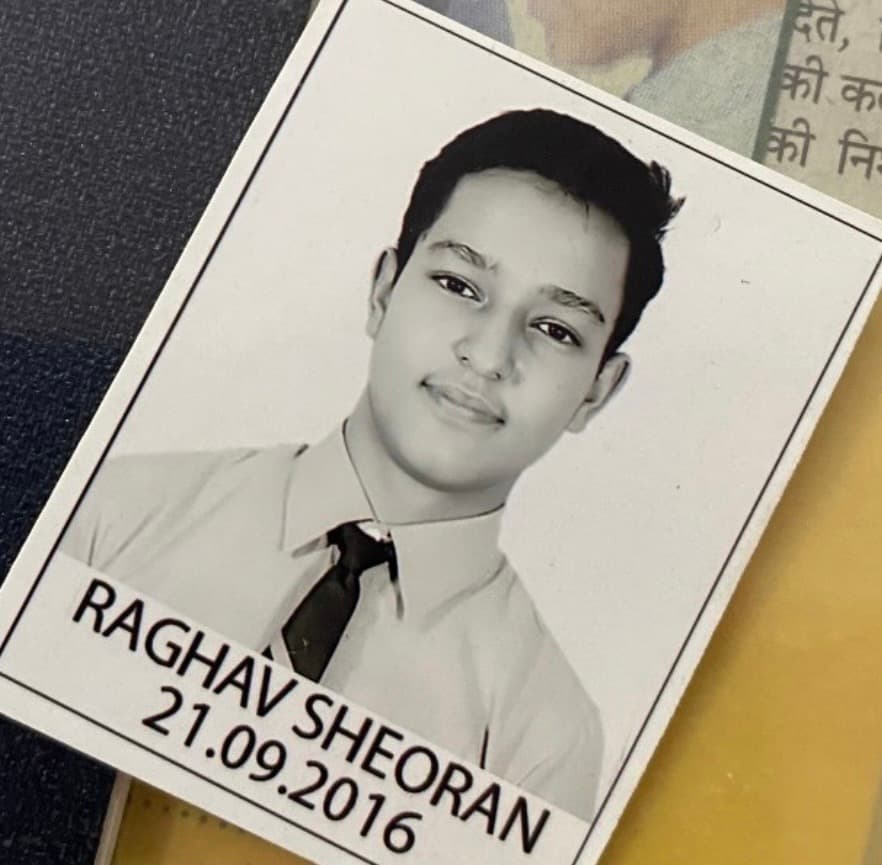
And then, sometime around the middle of the vacation, my hand started hurting.
At first, I didn't think much of it.
I assumed I had probably pulled a muscle or gotten some kind of sprain. Maybe I'd cycled too much. Maybe I'd done something without realizing it. It didn't seem serious enough to worry about.
So I ignored it.
But the pain didn't go away. Slowly, it started getting worse.
Eventually, I told my parents. Like most parents would probably say when their child has some unexplained muscle pain, we initially thought that a little exercise or stretching might help. We tried that for a while.
It didn't.
So we decided to see a doctor.
The first doctor we went to was an orthopedist, and we continued consulting him for most of the summer. After looking at my symptoms, he told us that it looked like frozen shoulder.
Frozen shoulder, he explained, was a fairly common problem. It wasn't something we needed to be particularly worried about. He started my treatment and told us that the pain would take some time to go away.
So we waited.
During this period, the doctor would also regularly have X-rays done. I remember one particular X-ray quite clearly.
The technician who was taking the X-ray looked at it and said that something about it seemed unusual. He suggested that we should get an MRI.
But when the doctor himself was telling us that everything was fine and that it was just frozen shoulder, why would we think otherwise?
So we didn't get the MRI.
And that was how most of my summer passed — with a painful hand, some treatment, and the belief that eventually the pain would disappear.
After a while, I think I simply made peace with it. The pain was there, but I could still do most things. I wasn't constantly complaining about it anymore. We trusted the doctor, and I had accepted that maybe this was just something that would take a little time to get better.
Then school started again in July.
The first day of school was a Monday. A few days later came Thursday.
I remember Thursday particularly well because Thursday was our PT period. We would have PT during the assembly period, and on Thursdays our school uniform was completely white.
There was another reason I remember that day. My hand was hurting.
But there is a very specific kind of fear you have when you're fifteen or sixteen years old. Sometimes you care less about the pain and more about what everyone else is going to think.
I remember thinking that if I didn't participate in PT because of my hand, everyone would notice.
So I participated. I did the PT even though it hurt.
And that was the turning point.
The pain that had been manageable until then suddenly became unbearable. It had reached a point where I could no longer convince myself that I could simply live with it.
When I got home from school, I told my parents that the pain had become much worse.
We decided that we needed another opinion.
My father knew an experienced orthopedic doctor, so we went to see him the next day.
This doctor didn't have an MRI machine, but he looked at the X-ray himself. He noticed something around the humerus — a lesion that didn't look right.
He told us that we needed to get an MRI as soon as possible.
That was when things started to feel different.
My father and I went to the nearest hospital where an MRI was available — Sarvodaya Hospital in Hisar. We reached sometime around three or four in the afternoon.
It was my first MRI.
If you've ever had one, you probably know what the experience is like. You're placed inside this huge machine, surrounded by an incredible amount of noise, and you're told not to move.
For me, it was extremely uncomfortable. I felt claustrophobic. I couldn't relax. I couldn't stay still.
The MRI was supposed to take around forty-five minutes.
It took almost four hours.
By the time it was finally over, it was evening. But there was another problem. The radiologist who was supposed to analyze the MRI had already left for the day. The scan was done, but there was nobody there to properly read it.
So we went home without the answer.
At least, that's what I thought.
What I didn't know was that the technician had looked at the MRI and told my father that, from what he could see, it might be a tumor.
My father didn't tell me.
I was still a kid, and he didn't want to scare me unnecessarily.
The next morning, Saturday, the radiologist came in.
He looked at the MRI and confirmed what the technician had suspected.
It looked like a tumor.
But I still didn't know any of this.
At that point, the doctors knew. My father knew. My family knew. And I knew nothing.
The doctors wanted to confirm exactly what we were dealing with, so they recommended two more tests: a PET-CT and a biopsy.
I didn't really understand what any of this meant. As far as I was concerned, we were simply going through a series of tests. Tests take time. Reports take time. Eventually, once everything was done, I would find out what was happening.
The PET-CT was done. The biopsy was done. And then came the waiting.
The biopsy report would take around ten to fifteen days.
The doctors told us that until the report came back, we could go home. So, sometime around Monday, my father and I came back home.
I remember being unsure whether I was supposed to go back to school the next day.
When I got home, my parents told me that I would take leave from school until the reports arrived. My father spoke to the school, and I was given what was essentially a medical leave for the next ten or fifteen days.
And honestly? I was happy.
Who wouldn't be happy about getting an unexpected break from school?
I spent those days at home with my family and I did a lot of Maths.
So those days passed quietly.
Then the biopsy report came.
We went back to the doctor.
And the doctor confirmed the diagnosis.
Osteosarcoma.
I didn't know what osteosarcoma was. I didn't understand what that word meant.
In fact, I wouldn't really learn what osteosarcoma meant until the first day of my treatment.
By then, almost the entire month of July had passed.
And now there was a completely different question in front of us: What happens next?
So yeah — this was the summer of 2017 that changed my life.